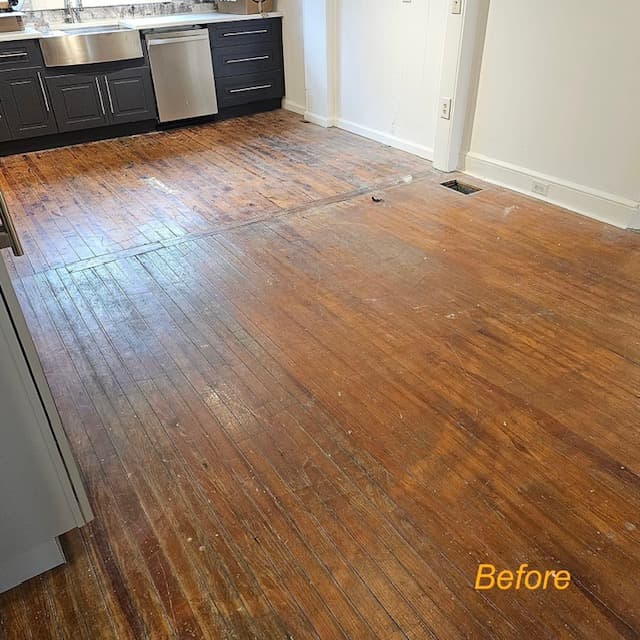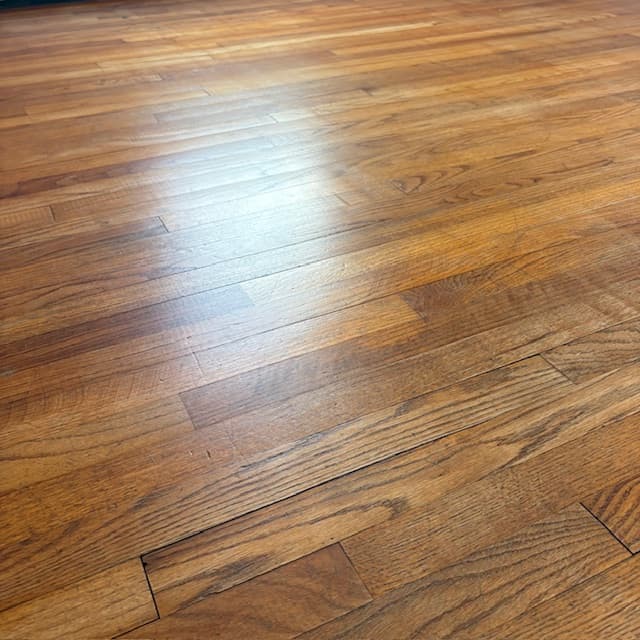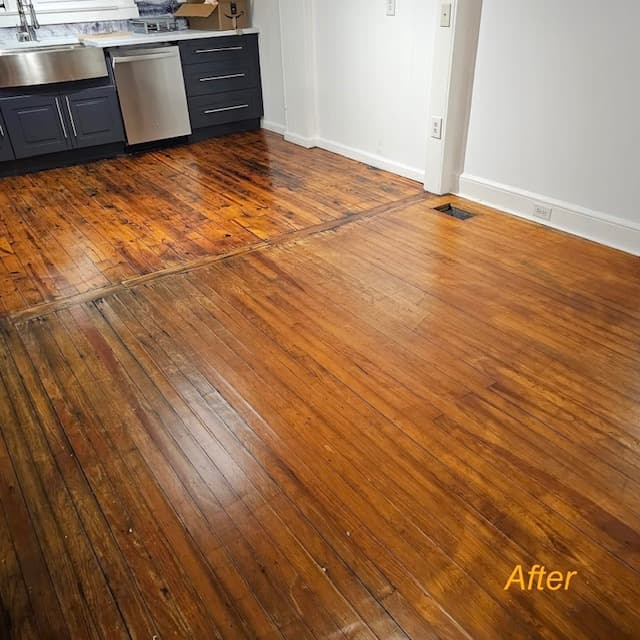
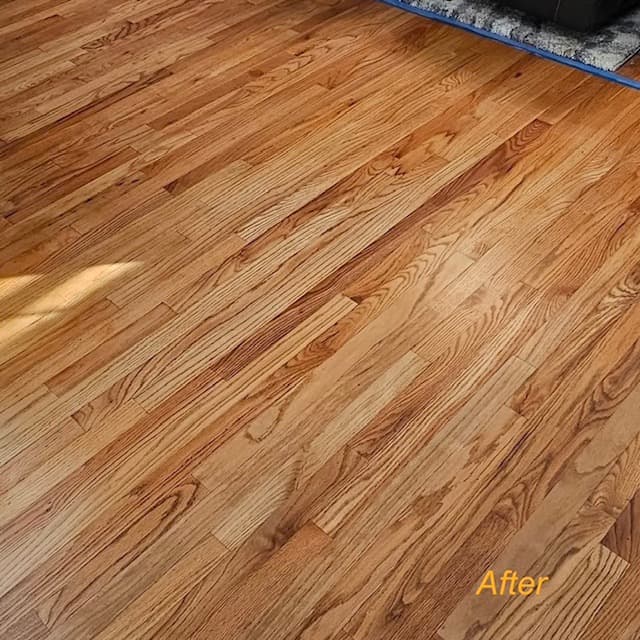
If your hardwood floors look dull, scratched, or hazy, you have two main paths back to beautiful: sandless (no-sanding) refinishing or traditional sand-and-finish. Both work. They just solve different problems, at very different levels of cost and disruption. Here is a straight comparison so you can pick the right one.
What is traditional hardwood floor refinishing?
Traditional refinishing uses heavy drum and edger sanders to grind your floor all the way down to bare wood, then rebuilds the finish with several coats of stain and polyurethane. It is the only option when a floor needs a full reset, but it comes with real trade-offs: clouds of fine dust, days of work, strong fumes, and the loss of a thin layer of wood every time it is done. A solid hardwood floor can only be fully sanded a handful of times in its life.
What is sandless refinishing?
Sandless refinishing, also called surface prep and recoat, skips the aggressive sanding. We lightly prepare the existing finish, deep-clean the surface so a new coat will bond, and apply fresh protective finish. Your wood is preserved, the dust is virtually eliminated, and most homes are done in a single day. It is the method Wood Floors No Sanding specializes in across Delaware.
Head-to-head comparison
- Cost: Sandless refinishing typically runs 40-60% less than a full sand-and-finish because it uses less labor, less material, and less time.
- Mess: Traditional sanding produces heavy dust that settles through your whole home. Our dust-free process eliminates roughly 95% of it.
- Downtime: Sandless is usually a one-day job and you can walk on the floors the same evening. Traditional sanding often means 3-5 days plus cure time.
- Wood preservation: Sandless removes no meaningful wood. Traditional sanding removes a layer each time, shortening the floor's usable life.
- Fumes: Our eco-friendly, low-VOC finishes are family- and pet-safe the same day. Traditional polyurethane can off-gas for longer.
When traditional sanding is the right call
We will always be honest about this: some floors truly need a full sand-and-finish. Choose traditional sanding if your floor has deep gouges down to bare wood, cupping or warping, severe water damage, or if you want to dramatically change the color (for example, going from a dark stain to a light, natural look). If you have already had two or three recoats over the years, the floor may also be due for a full reset.
When sandless refinishing wins
For the majority of homes we see, sandless is the smarter choice. It is ideal for floors with surface wear, light scratches, dullness, hazy old polish, and worn traffic lanes, where the wood itself is structurally sound. You keep your wood, save money, skip the dust, and get back to normal life the same day.
Not sure which one you need?
The honest answer is that it depends on your specific floor, and that is exactly what a free assessment is for. We will look at your floors, tell you candidly whether a recoat will do the job or whether you genuinely need full sanding, and give you a firm quote before any work starts. Call us at (302) 427-3636 or request a free estimate.
Get a Free Refinishing Estimate
Dust-free, same-day hardwood floor refinishing across Delaware and a 100-mile radius. No-obligation quote, honest assessment.